‘The Chenoo’ by Graham Nolan – a review

I love a great idea. When I saw the promotional video for The Chenoo, it got my strict attention. I’ve seen quite a few promo videos for ComicsGate projects. The funniest was the one for Cash Grab, made by Scotty Richard. But the one for The Chenoo had depth and instantly created a great atmosphere, even if I thought the chosen music felt overdone. This book surely has promise, I thought.

The promotional video for ‘The Chenoo’

I received the book not that long ago – the middle of January 2021. I had no problem waiting, as that is the nature of crowdfunding. The benefit of backing a comic book project is that you know that some time in the near to mid term future, the book is going to arrive. You will get emails which keep you up to date about the state of the book, which does take away little of the surprise. But, it’s still rewarding when the finally receive the book in the mail.

Graham Nolan packed the book very well. Really, if there is any further protection that he could have given the book it would have been redundant. My copy arrived in mint condition. It came in a Gemini mailer, which a lot of ComicsGate publishers prefer. Inside, the book was further protected in a plastic sleeve with a piece of white cardboard behind the book.

Included in the package is one trading card, a rather odd bookmark, a sticker, and a letter from the author thanking the backers. The trading card is great, and is printed very nicely, but it should have been a bit thicker. The piece of backing card could have been printed with Chenoo themed art, or something similar.

Graham Nolan always remembers that it is the customers who make his work possible

You really could spend hours and hours fantasising about what extras could have been included with any given book. Foil stickers, keyrings, a full set of cards, what have you. We can hope that with each new book that the author releases, we will get more extras, and that they will be more sophisticated.

The book itself is the most nicely printed comic book I have yet seen. Not that I have handled very many comic books, much less premium ones. But without anything to compare, I am impressed. This is in stark contrast to the disappointing design of That Umbrella Guy’s first book, The Case of the Littlest Umbrella (which I reviewed last year).

This book is perfect bound, which means that it has a spine. I don’t have any issue with this, but the book isn’t thick or long enough to warrant perfect binding, and I would have preferred it to be stapled like a traditional comic book. The cover is a lovely satin finish, with the title being printed with a special glossy plastic. The pages are also of high quality stock.

One of the problems of perfect bound books is that you can’t always lay them completely flat. In any case it presented no challenges to handling. One aspect I find odd is that Nolan’s signature appears twice on the cover – once as part of the print file, the other done by hand. There is no need to have a signature on a cover more than once. If a CG artist is also the author, and they are signing the cover by hand, there’s no need to include their signature in the print file.

I had high expectations for this story, and I wish that I could say that they were met. The promo video was so well done that I got a feeling of being immersed in a rich environment with varied characters and lots of background.

But the story did not do justice to the idea. Nolan obviously could not spend 20 pages establishing a prologue. He set himself a limit of so many pages, which is logical, as he wanted to get the book out in a timely manner and with a reasonable cost.

But that is the problem here. The book isn’t ambitious enough. There is no room to develop a build-up, rich character history, or anything like that. Perhaps my expectations are much too high, but I stand by those expectations. I do not see the comic book as a trivial story telling medium.

I have read two of Alan Moore’s graphic novels, the most important being From Hell. I’ve also read pretty much all of Michael Crichton’s novels, and all those of Dan Brown (though his recent one, Origin, was a dud). Recently I’ve been reading more novels of the ‘outback noir’ genre.

I’m used to grade A storytelling, and I am beginning to question whether comic books of such short lengths can offer anything challenging or satisfying. The Cyberfrog saga is spread over four books, which is probably going to be a total of something like 200 pages or more.

The Chenoo contains 57 pages of story plus a few pages of art, and a list of names of every person who backed the campaign. Nolan is a professional who is considerate to his audience, and who knows how to present a finished product.

57 pages sounds like a lot, but it is paltry, even when compared to a short story or a one-act play. That’s mainly because comic books do not have a large number of words on the typical page. Short stories are a very different animal to comic books. The comic book is primarily visual and is itself a product. The short story does nor require a specific medium to exist. You could print it in your office, copy it out by hand, read it aloud, put it up online, broadcast it, publish it in a magazine, whatever. Comic books exist in a particular format, and must be physical (digital comic books are not popular).

What a good short story has is depth, immersion and hopefully engaging characters. Truman Capote was very good at this. Usually, an adapted screenplay is based on a novel. But the movie Blow-Up was loosely based on a short story by Julio Cortazar – you can find it online as a PDF, and I recommend it highly.

Nolan has fewer than 60 pages to work with, and that doesn’t leave much room for character development. The characters are fine as they are, but we don’t know much about them. And if we don’t know much about them, we can’t empathise with them as much as we could.

In Psycho, Alfred Hitchcock spent almost 20 minutes establishing the background and motivations of Marion Crane. That’s a large part of the script, and it’s longer than it takes to read The Chenoo. You see the problem here.
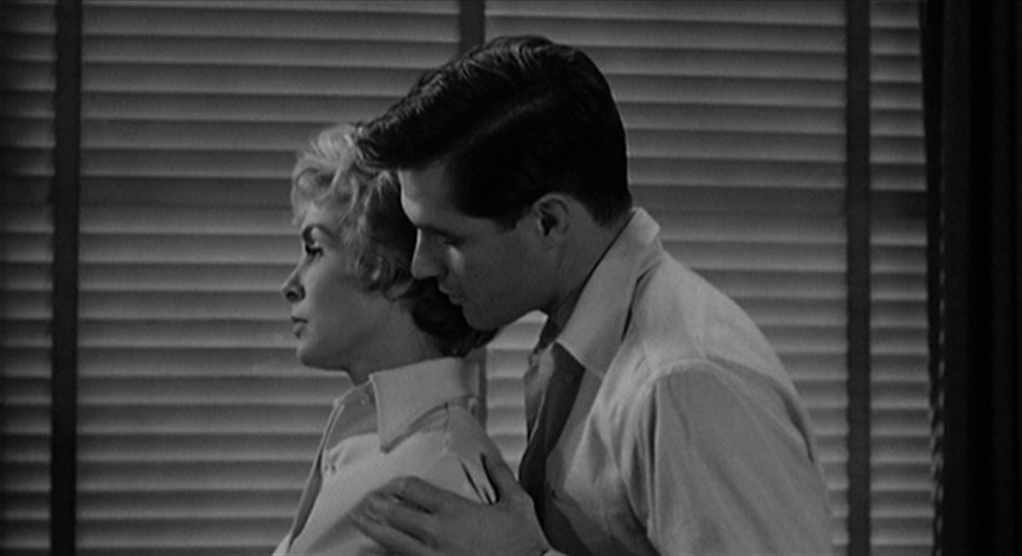
Alfred Hitchcock gave the audience plenty of time to know Marion Crane’s character in ‘Psycho’

You can of course achieve a lot in a short time or space. I refer you to the short story Blow-Up which I mentioned above. But there is usually no substitute for the time necessary to establish characters. If you’ve seen the film, 30 Days of Night, you’ll remember that it took some time to establish some kind of background before getting into the meat of the story.

In the pilot episode of Twin Peaks, we get a terrifically written and performed introduction to FBI Special Agent Dale Cooper. In contrast, we don’t know very much about Laura Palmer until later episodes. But she is enigmatic in any case.

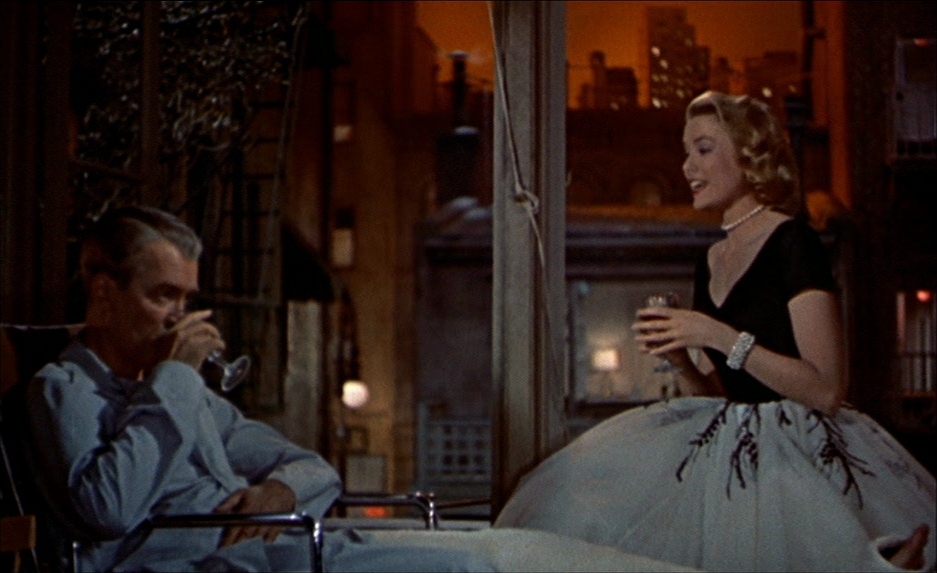
One more example of how to establish character: Rear Window, another masterwork by Hitchcock. Note here also that Hitchcock does not rush into the story – he lets things settle and evolve first, and as a result, the audience is immersed. Feature films don’t offer the same scope for character as novels do, but there is enough room to work with, especially for a top class writer.
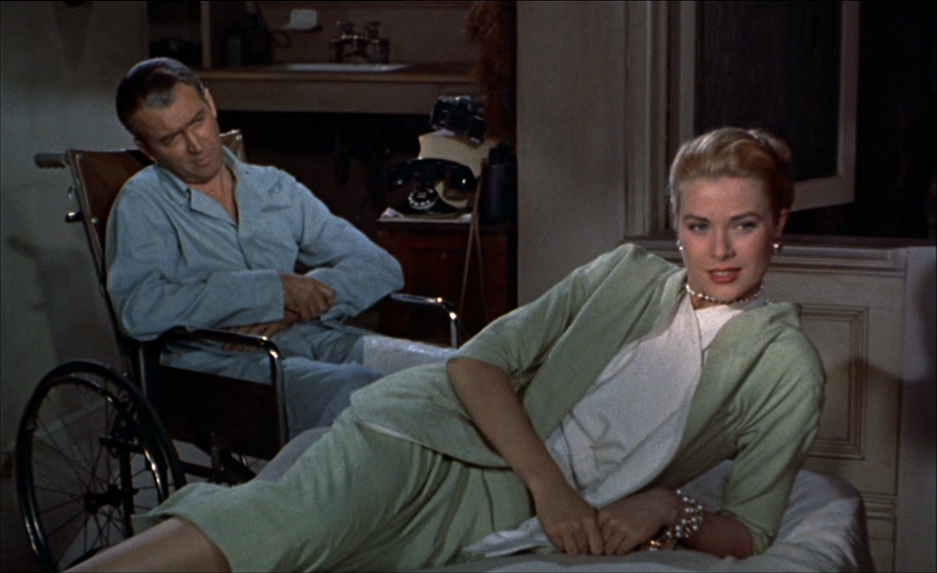
Films like ‘Rear Window’ give the audience time to settle in before launching into the plot

In the beginning of The Chenoo, the two characters aren’t really that interesting and have nothing about them which could elicit curiosity. We just don’t know that much about them. One way that Nolan could make us empathise with the two men would be to make one of them homeless. Or an army veteran getting back on his feet after years of struggle. Or we could have seen the beginning or the end of a relationship between two disparate characters, such as a rich man and a poor man.

Overall though, the art and panel layout are top class. Nolan has drawn the entire book in grayscale, rendering only blood in colour. This device works well enough. It would ruin a book of photographs, but for a comic book it is certainly valid.

Panel layout is well disciplined. Where necessary, Nolan takes some creative liberties with the layout that work very well, given the context. Nolan also knows how and when to use full page panels. I’m not a fan of overlapping panels or odd panel shapes, but it’s a testament to Nolan’s skill that I really didn’t notice until after I had finished the book.

Lettering is supposedly by someone named Carlos Mangual. The lettering is very neat and legible, but all of it looks like it was typeset. This applies to the sound effects, too – it looks like they were taken from stock effects. I see no evidence of hand lettering in this book. There’s nothing wrong with using fonts in comic books, as this is exactly how every other form of text is published. But if you are using fonts or stock sound effects, then state as much.

Nolan used stock SFX, as well as a lettering font, both of which should have been done by hand

Speaking of SFX, I find that they are often overused. I recall seeing page of Jawbreakers: Lost Souls that had a sound effect that was not only redundant, but it weakened the effect that it was supposed to impart. I strongly believe that the sound has to come from the imagination, triggered by the art. Comic books are a visual medium, so the visuals should be allowed express themselves. In The Chenoo, there are many SFX that don’t need to be there, although for some reason this is only a problem in the later pages of the book.

There is one moment right near the end of the story, where one character utters a statement which is way too expository, and this takes you out of the story. But Nolan is in good company here. Interestingly enough, it is his namesake, director Christopher Nolan, who makes this boo-boo on several occasions in his otherwise terrific film, Dunkirk. Dialogue which is obvious in its exposition is clumsy and drawn attention to itself. Expository dialogue is useful and necessary, and is very important in theatre and cinema, but good writing hides it.

The basic ending of The Chenoo is, in principle, quite good. It’s solid compared to a decent Hollywood script. But there is no foreshadowing. Good storytelling usually features several mechanisms. Confict is one of them. Foreshadowing is another, as well as the anti-climax, the denouement, the red herring, etc.

The Chenoo seems to lack all of these elements, and comes across as very one-dimensional. Sure, there are moments where you might identify conflict here and there, but not in a meaningful way. You may think that there is a lot of conflict in this book – after all, we have a monster that is chasing down the main characters, right?

Think of Jaws. Where is the conflict in that film? Between the main characters and the shark? Between the characters? Both? What about other monster or horror movies? I’ll let you think about that one.

I do not consider myself a dramaturge, but if a story doesn’t grab me, I can usually figure out why. Not all good stories have obvious traits that you would expect. Breakfast at Tiffany’s – the story by Truman Capote – is extremely compelling and yet I cannot recall any obvious conflicts. The only conflict I recall is implicit: one day Holly Golightly was here, and then one day she wasn’t, and nobody knows if she will ever return. One of the keys to great drama is when characters face obstacles in getting what they want.

As far as conflict goes, a lot of David Lynch’s short films and TV commercials don’t have any obvious conflict either, although in many cases you cannot resist playing them again and again. Sometimes there’s a magic to a story that you can’t easily explain.

When you’ve read some of the world’s best novels and short stories; when you have seen some of the greatest movies; when you have read the greatest graphic novel ever written; when you’ve seen some of the most famous and celebrated stage plays, you have high expectations when it comes to storytelling. The Chenoo is a terrific idea. It could have been written with enough depth to create something that could have attracted a long term following.

Finally, there are two events in the story, occurring near the end, which are internally inconsistent. Needless to say I will not be specific. But they are so obvious that I am amazed that they are there. One of them might be excused because Nolan has only so much room to work with, but by this point I was just frustrated and disengaged completely.

Graham Nolan deserves high praise for his attention to detail as far as presentation goes. And he never forgets that it is the customers that justify his work. His book, as an object, is an example for other creators to emulate. He made sure to have it printed in North America, too. It’s a shame that some ComicsGate creators went for the cheap option of having their book printed in China. Nolan may not have written great fiction but he proves himself to have very high standards as a publisher.

So, do I regret backing this campaign? No, I absolutely do not regret it. The more comic books I read, the more I can figure out what they lack, and what they need to be truly engaging. I have a few ideas that I want to realise one day. One thing I need to do, as an aspiring author, is to get a feel for what’s being created, and how. In addition, ComicsGate people are just terrific. I am happy for Graham that his campaign has been a success, in the same way that I am happy for That Umbrella Guy that his two campaigns have been successes.

I hope that Nolan’s next book, Alien Alamo, is written with the care and attention that the best scripts are given, whether they be stage or screen. Because otherwise, his art and ideas and standards of production quality will all be for naught.
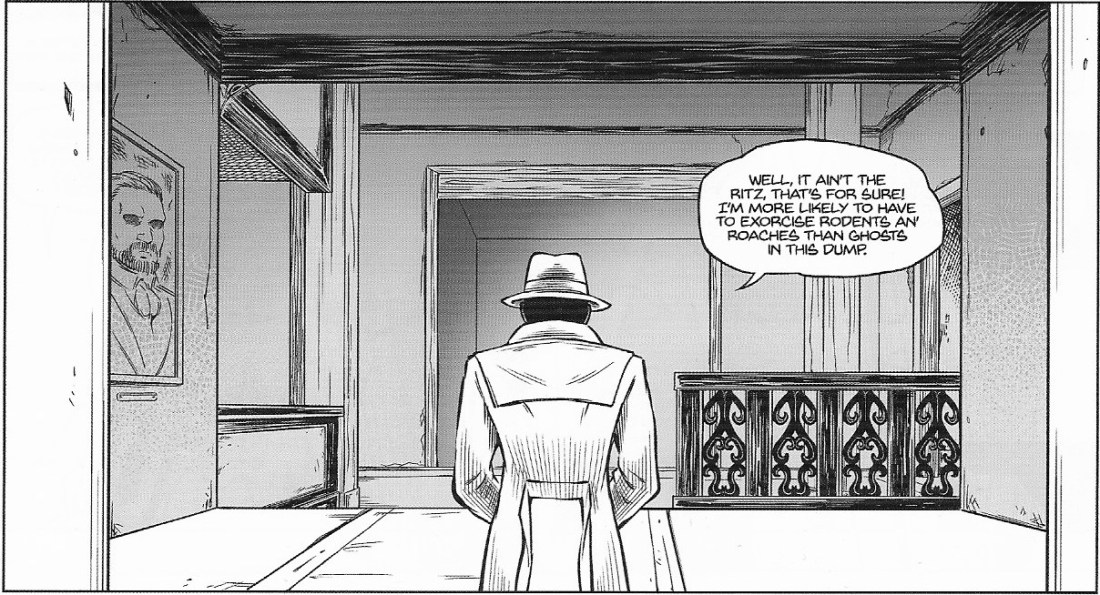
The Chenoo on Indiegogo

Alien Alamo on Indiegogo

grahamnolan.com

‘The Case of the Littlest Umbrella’ by That Umbrella Guy – a review

The Case of the Littlest Umbrella is the first book written by That Umbrella Guy, an independent creator who has never before published a comic book. TUG is a prominent member of ComicsGate, and has his own online presence, including a YouTube channel.

If you’re not familiar with ComicsGate, it is an idea that creators should have the freedom to pursue their own IP, that treats customers with respect, and that is free from politics or any other divisiveness. CG includes customers, fans, and creators alike.

The book was launched as a crowdfunding campaign in 2019. The initial funding period saw the book reach over $75,000, and it made a grand total of $109,580 before the campaign closed. Following this unexpected level of success, TUG wrote a second book, with the same protagonists, which is currently in production. So far it has taken $143,280 in revenue, a significant increase over the first one, and it is still In Demand.

The Case of the Littlest Umbrella is described as a family friendly horror story, an “all-ages Lovecraftian experience”. Perhaps this sounds contradictory, but in fact this specific genre is quite common. You may be familiar with Goosebumps books, or Scooby-Doo, or The Simpsons Halloween Special (there’s only one good one). In fact, you could argue that Halloween itself is family friendly horror – kids indulge in it far more than adults do.

Being a crowdfunded campaign, this book did take a while to deliver, but the ongoing global health crisis caused further delays. I suspect that TUG will move printing to North America for future books, for various reasons. That is actually the norm – most CG books are printed in the USA or Canada, to the best of my knowledge. There is no criticism here of the delivery schedule, but I should point out that crowdfunded books are published in a different way than mainstream books.

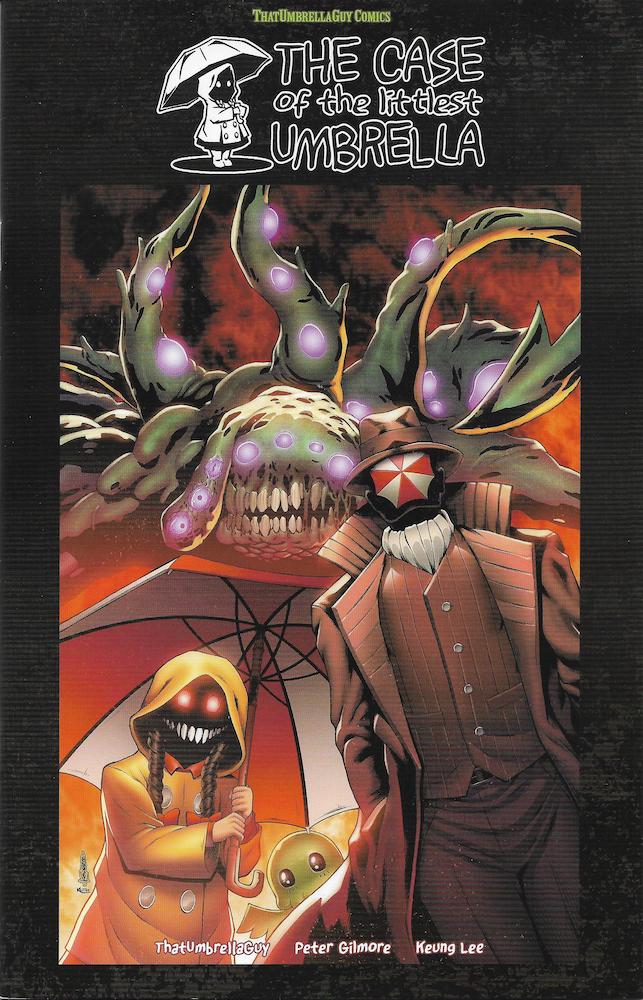
My first criticism is that the book doesn’t look like a real comic book should. Now, the paper stock and print quality are terrific. But the cover looks very much like a self-published book would look like, which is to say, a bit… cheap.

Yes, this is actually a self-published book, but that’s not the point. The point is to give the look and feel of a proper comic book (or graphic novel). This is easy to do. This does not require the use of flimsy cover stock or newsprint (not that those things are necessarily bad).

It does not even require the inclusion of charming advertisements, although it would be wonderful to see some creativity applied here, particularly for fictional brands and products. I’ve invented a few brands myself, purely for fun, due to my obsession with advertising. Once you flip through a collection of ads from the 1990s, your imagination will involuntarily deliver.

This is the book’s actual cover (the banding is due to my half-dead scanner):

And this is closer to what it should look like:

Notice: some kind of logo or hallmark should be in the top left corner. The title should be prominent, even though it risks obscuring the cover art (Jawbreakers: Lost Souls makes this mistake of undue reverential treatment of the cover art). Finally, the cover art should be a full page bleed, even if it’s a small graphic within large white space.

Once again, the paper stock is great and it feels good to hold and turn the pages. It’s arguably too good, depending on your tastes. However, the good news is that the book does stay open by itself. That includes both the first and last pages. This book is designed well as far as function is concerned, despite the lack of the aesthetics of a traditional comic book.

To my disappointment, the 44 page book contains three stories, not one. The main story is the interesting one, and it is 26 pages long. It is written by TUG and Keung Lee, and drawn by Keung Lee. The other two are more aimed at young children, and are written and drawn by Peter Gilmore.

The latter two, The Case of the Littlest Dino and Escape from Dino Island, are not really that interesting and could probably qualify as cereal box comics. Dino Island actually has a lot of promise, but it would need its own book of at least 44 pages to grow into. The art is superb, and the characters include TUG and his daughter, Little Umbrella Girl, both of which you will grow fond of, especially if you are familiar with TUG’s channel and personal life.

But these stories are unnecessary and together take up almost half the book. They force the main story to become diluted and therefore lacking in any depth. And that is the key as to why this book does not deliver what it ought to.

I’m not a horror fan, preferring spookiness and brooding to horror or gore. However, a good story is a good story, and the classical nature of this book’s inspiration, H. P. Lovecraft, promises much. I can appreciate films that have horror in them, such as Silence of the Lambs (terrifying), Twin Peaks (hypnotizing, brooding and creepy), The Exorcist (unsettling), and the series, Millennium (which dealt with evil more than it did with horror). In addition, I have read a few Stephen King novels such as It and The Shining. I’m a huge fan of Edgar Allan Poe’s work, which should be required reading for everyone.

Good storytelling has many facets, not all of which are required in any one story. Michael Crichton wasn’t always great with characters, but his stories were superbly told. Dan Brown is a terrible writer, but his best novels are so eye-opening that you never notice.

I wish I could say that I have read Lovecraft, but I have not. One podcast I listen to now and again, The Bible Geek, talks about Lovecraft a lot, and eventually created a podcast dedicated to that topic, The Lovecraft Geek. I have pretty much no exposure to anything Lovecraft, although now I’m tempted to give his work a look.

TCOTLU is set up quite well. I like the premise, the foundations, the characters. It appears to have elements of Millennium, or perhaps The X-Files, and goodness knows what else. TUG and his daughter, LUG, are the two protagonists. The supporting character, Bill, is also somewhat engaging – at least in principle, as we don’t see much of him.

The story begins with a short prologue: a writer in what seems to be a haunted hotel. Or is it all in his head? Starting off with a prologue is a very effective way to give a story depth. The best prologues are as disconnected from the body of the story as possible. The best example is The Exorcist. Do you remember the prologue? You probably don’t unless you’ve seen the film in the past few  years. And if you don’t, you will be pleasantly surprised with what you see. That is excellence in storytelling.

However, the prologue here doesn’t have much impact. And that’s precisely because the main story in this book is only 26 pages long. We don’t really have any idea as to who the character is. We don’t know what he is writing, or why. On the surface, what is on those pages should be interesting. But it’s not. We don’t even know what might be on those pages, or why the author behaved the way he did before he left the hotel.

It’s the same for the opening scene of the main story. We should be interested in where TUG works, how he got there, what cases he is working on, and so on. And we are once again disappointed. The reason is quite obvious. It has nothing to do with the number of pages, but the lack of depth. Depth is created in several ways. The simplest way is to give characters and places dimension, and you can only do that with details. What is the name of the agency for which TUG works? Where is it and why does it exist? Where does TUG live? How did TUG get this job and what was he doing previously?

These questions don’t have to be completely answered, but they do need to be hinted. In the pilot episode of Millennium, we are given some glimpse into Frank Black’s background. Not a whole lot, but enough to establish something about him. The episode, like most serialized TV, is self-contained, but does lay down ominous hints at what the future will bring.

I have not forgotten that TCOTLU is supposed to be kid-friendly. The events that occur in Millennium are so disturbing that I would not expect to see them in TUG’s book. But what I do expect is just not there.

To give you an example of how time or space limits can produce incredibly engrossing and compelling stories, I point you to three films, all created by David Lynch. Premonitions Following an Evil Deed is but 63 seconds long. It was made as part of the 100th anniversary of the Lumiere Brothers’ first cinema camera, and is part of a collection, Lumiere and Company.

The next example is one of the shorter stories by Edgar Allan Poe, The Sphinx. I would be very surprised if you didn’t find this incredibly effective:

https://www.eapoe.org/works/tales/sphinxc.htm

At the end of the day, we need to tell our own stories in our own style. Nobody appreciates copycats. But, we can certainly find inspiration and illumination from storytellers who came before us.

The second story, The Case of the Littlest Dino, at five pages long, is obviously intended for parents to read to their younger children.  But it takes away valuable space from the main story.

The third story, Escape from Dino Island, at ten pages, is potentially interesting in its own right, but again, it takes away valuable pages that could have been used for the main story.

Dino Island throws us right into a situation where LUG is tied up by a supercriminal who owns a dinosaur infested island. But, there is no immersion. There is nothing here that stokes the imagination, either. It seems that Peter Gilmore has little of interest to add to the genre of dinosaur island sci-fi. But his art is superb here, and on the level of that of Keung Lee.

The world which TUG has created has promise, and the fundamentals are all there. The art, to say it again, is grade A. The characters are likeable, especially LUG, bless her little gumboots and pigtails. Yet the execution is lacking. The cover should have been more dynamic, the book was not printed in the USA or Canada, the story didn’t arouse my curiosity, the characters lacked depth, and I didn’t feel as immersed as I would be in a Poe story or a Crichton novel.

But I certainly don’t regret backing this campaign. When you back the campaigns of creators, particularly ComicsGate creators, you’re not merely interested in the books, you’re supporting people. I do not regret that I spent US$25 plus postage for this book. In fact, I backed the sequel, Another Case for the Littlest Umbrella. If you are CG, and you have the budget, go to the campaign page and give it a look.

Lessons about crowdfunding from ComicsGate

A collection of the lessons learned by ComicsGate creators while funding their books

In the beginning, you should have either:

  • A completed script; or
  • An outline from which a complete script can be written in a timely manner.

Don’t make promises you can’t keep. If you think you will only sell 500 books, then you can promise to sign every one. But what if you sell 1,000? 2,000? 5,000? You have just committed to signing all those books, and you cannot back out of that. If you aren’t sure, you can promise to sign only a fixed quantity to reward early backers.

Try and under-promise. Give a realistic time frame for how long the book will take to complete. It’s better to promise a time frame of 8 months and deliver in 6 than to promise 5 and also deliver in 6. You still delivered in 6 months in each case, but in the first case, you under-promised and over-delivered.

Understand the crowdfunding platform that you have chosen. If you are not sure which one to choose, Indiegogo is the default choice. Understand the fees, returns policy, and what kind of content is not allowable. Use clear language, especially for your logline. Make sure you can describe your story in one sentence if you need to.

The ‘gold rush’ mentality will make you miserable when you discover that you can’t just put up a campaign and expect the crowdfunding gold to just pour in. Doug TenNapel made over $750,000 for Earthworm Jim: Launch the Cow. Jon Malin made almost $175,000 for Graveyard Shift Vol. II. But these, and other creators like them, have established a reputation. Sometimes you can strike it lucky, just like winning big money in a lottery. But you should never count on that happening. Being creative is challenging, and creators should want to embrace that challenge, even knowing that they might fail from time to time. Clint Stoker, owner of the Sweetcast channel on YouTube, talks about this and related issues here:

(27:35)

In Hollywood, there is an open secret: producers are not only interested in the next big idea, they’re interested in the next big character. If your story doesn’t have a great character, perhaps try and find a way to make that character a little more interesting. However, not every character has to be Charles Foster Kane or Don Draper or Laura Palmer.

Itchy and Scratchy are good characters. Poochie is not.

If you are considering a sequel, have a good plot outline ready for that, too. Do this before you launch, even if you don’t know if your goal will be reached. It’s like homework: it’s better to finish it before the weekend. In Hollywood, the common wisdom is that you should have a second script ready if your first one is produced.

Good stories have several key elements, such as conflict, character arcs, protagonists, antagonists, foreshadowing and so on. You don’t need to be conscious of these elements if you are naturally good at telling stories. But if you find that your script doesn’t quite have what it should, maybe it’s missing a key element. Above all, your story must not be boring.

Create a legal entity like an LLC, even if you only want to create one work. If your budget allows, ask a lawyer specializing in IP and defamation to read your final product. If worst comes to worst, your LLC or S-Corp will protect you. In law, there is a lot of leniency when it comes to works of art, but you are not creating art works, you are creating a commercial product that happens to include art.

You will have legal obligations, from starting an LLC to declaring its income. Keep your receipts, and do everything via your LLC. Be organised.

If you are starting a publishing company as well as launching a book, make sure you have at least purchased a domain name and that you have set up social media accounts. You should also set up a Web presence if you plan on making a series of books under the same title.

Ask your accountant if they can also handle small business accounts. If not, find one that can. You, or your LLC, will have to pay taxes.

It’s not illegal to use brand names in stories, but it is advisable to not have those brands associated with negative connotations in your story. It’s a grey area, so try and use a fictional product where the connotations involving it might be negative. This is apparently more of a problem in cinema than in literature.

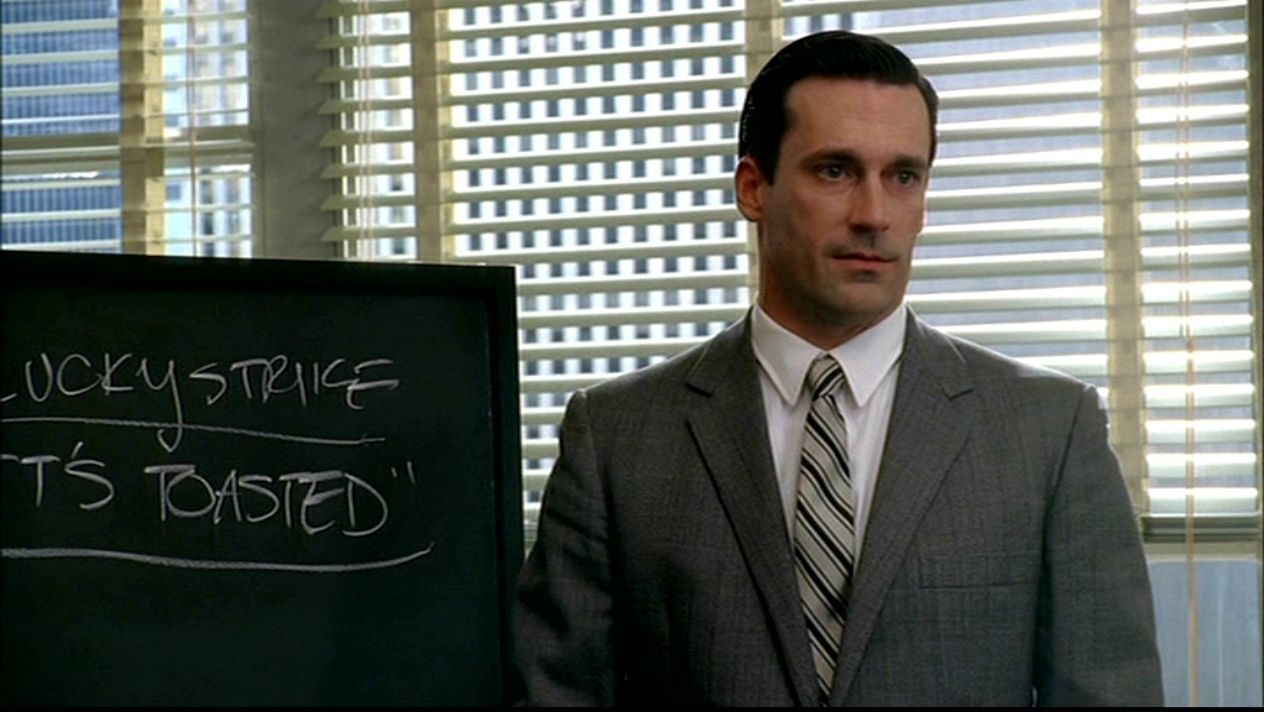
‘Mad Men’ often referred to real products such as Lucky Strike, Leica and Jaguar. It’s safer to use fictional ones if you can. (Note that all characters in this show are solid, and the writing and structure are excellent. ‘Mad Men’ is a masterclass in storytelling if you are creating serialised content. It is perfection.)

If you can, hire a pre-press professional. Your printer may very well be able to provide such as service. Either way, ask your printer what they need from you regarding pre-press.

Find an artist unless you want to draw your book yourself. When you do, you will have to commission them to do preliminary artwork for publicity and your crowdfunding campaign. If you are an artist who wants a writer, you will have to agree on an outline to work from if the campaign becomes fully funded. Commission a completed script before you launch your book if you and the writer can agree to terms.

Do not promise that your book will be a limited item. There can be limited variants or editions but the book itself should be able to be reprinted. You don’t have to allow the campaign to go into demand, but leave your options open.

Do not offer more than two tiers for the campaign. If you have to offer more than two, try and offer one less than you really want. Be clear as to how you label your tiers. ‘Book + Ashcan Prologue’ is preferable to ‘Double Deuce’. Just because Ferrari makes the grave error of offering 27 colour options for their cars doesn’t mean that you should follow their example.

Ferrari offers no less than 27 colour options. This is a bad idea. Nobody should be offered British Racing Green as an option for any Italian car. Do not offer more than two tiers in your crowdfunding campaign if you can help it.

Each campaign should feature only one book. Naturally, you can include supplements like posters and stickers. It’s great that you want to offer choice to your customers by offering them more than one book per campaign. But you have two problems: one, your campaign will have no focus; and two, you will have to multiply the number of tiers by the number of books, in addition to even more tiers which offer two or more books in the same package.

Mike Miller offered three books for this campaign, when it should have focused on one: ‘The Meg’. The number of tiers was no less than 25. This campaign earned half as much as ‘Lonestar: Heart of the Hero‘.

Do not lose one moment of sleep over the likely probability that people will release your book on the Internet. It is not your concern.

If the public takes a special liking to your characters, share fan art on social media if you see it. Only take legal action over serious copyright violations if any occur.

Cyberfrog fan art shared on social media by his creator, Ethan Van Sciver.

If you are criticised online, you are not required to explain yourself. And, if you have done nothing wrong, do not apologise, ever. You can have fun with antagonists, but be restrained and never be cruel. Even full-blown SJWs are children of God. If people have questions, answer them. You might already have a steady job, but a creative project is no less than a second full-time job, albeit a temporary one. Take it seriously, and be professional. Never be an antagonist.

If you don’t have a presence online, ask as many small channels as you can for interviews and air time. If they like your work, they would love to have you on their show. Bigger channels might like your work, too, but don’t expect them to promote your work just because you are ComicsGate. In Hollywood, relationships come before business. There’s a good reason for that. Give as much as you can, and you will receive later.

Let people know about your project before you launch your campaign. Don’t launch your campaign before you are able to promote it.

You can keep some things secret. But in general, share as much as you can. Don’t be precious.

Once you know the break-even point on your project (usually a book, but it could be something else like a video game or an animated cartoon), set your minimum goal to that break-even point. Some will disagree, but it’s better to not print the book than to print it at a loss to a small audience. Set your break-even point a little higher than you think it should be, to cover unexpected problems such as late cancellations.

Avoid using more than one crowdfunding platform. It might be tempting for you to put your project on Indiegogo as well as Kickstarter. But think very carefully about this. Let’s go back to your break-even point. If you set your break-even point correctly and you are on one platform, and if that point is met, then you can start producing the book. But if you want to put your book on two platforms, you have a choice: split your break-even point in two, or double it, by setting either of those goals on each platform. If you split your break-even point in half, and it succeeds on one platform but not the other, you are in trouble. If you double it, you might meet your goal on one platform, which is great, but you may not meet it on the other, which means you cannot claim those funds. There are other issues, covered in this video by Richard Meyer:

(23:14)

You have the right – even the duty – to make a profit. Crowdfunding does not entail a limit on your financial or creative reward. Crowdfunding is a tool to establish demand before you produce your book.

You are not being generous by undercharging for shipping. You are walking into a wasteland of regret. It is not for you to worry about saving your readers a few dollars. They can look after themselves. Your job is to make sure that your book either breaks even or turns a profit. Making a loss is not a hallmark of virtue. The reader who buys your book at a loss at $15 will still buy someone else’s book for $25 + shipping.

This is what Australia Post charges for postage from Australia to Great Britain for single parcels. Different services may offer cheaper rates for bulk orders. Do your homework!

If you feel that merchandise is appropriate for your book, your strategy will depend on what the item is. A t-shirt should never be bundled with the book. It will cost more to post, and it will also cause you trouble if you send the wrong size. You will have an insufficient amount of one size, and too much of another. Let a dedicated merchandiser handle your t-shirt orders on demand (basically, this is dropshipping). Make the t-shirt separate from the campaign.

An editor will see problems where you can’t. So hire one if it’s within your budget. You want to present your book as perfectly as you can. Otherwise, ask a few friends to give honest feedback. The point here is to seek an independent, detached opinion of your writing. The lettering will also have to be checked.

An editor can help you refine your writing. At the least, find a spelling Nazi to examine your letterer’s work.

You can hire a different artist to do the cover. This will add a touch of sophistication to the book. As a bonus, you have given work to one extra person. You can also offer a limited variant cover for early backers. Offer limited bonuses to reward early backers which will not be offered once your book goes into demand (i.e. when your campaign ends and becomes a store).

Downcast‘ by Clint Stoker. The campaign for this book offered two covers, one of them by the interior artist. The creator ran a very successful campaign despite having a small primary audience.

Make it a condition that no refunds will be issued once the campaign has concluded. This will prevent sabotage, whereby malignant actors support your book before asking for a refund, which puts you at risk of a financial loss. You may apply more lenient conditions once the book goes into demand.

Comic books are for everyone. If you wish to run a gentlemen’s or ladies’ club instead of a business, by all means do so, but make sure that the asking price matches the exclusivity.†

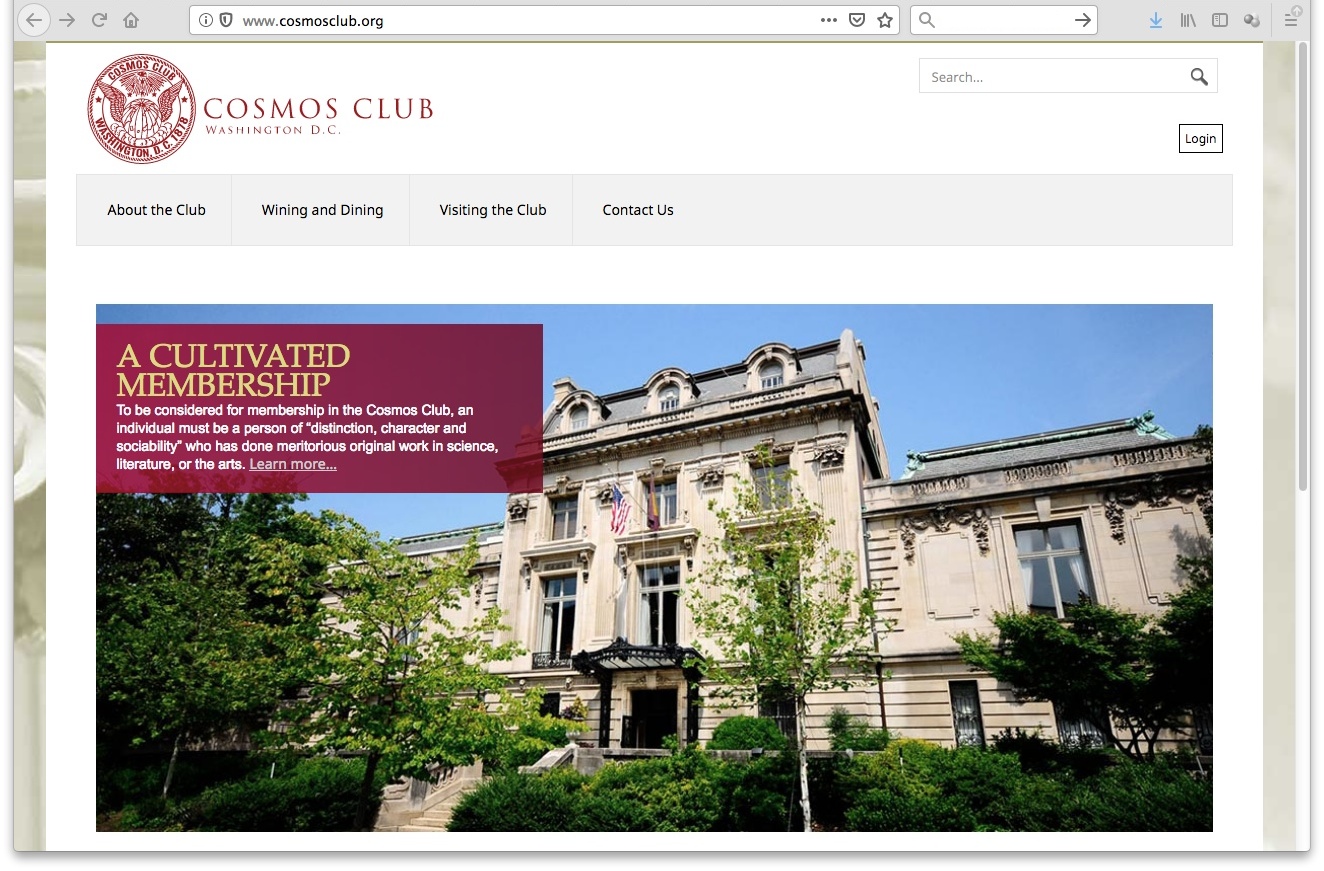
The Cosmos Club in Washington DC.

Make use of your email list. The people who bought your book will not mind an occasional email after they have received their books. You should use your email list to announce new projects, if you decide to launch them. Engage your readers. Include polls or surveys in your emails if appropriate. If you can afford it, you can send promotional material to customers’ postal addresses on rare occasions. This can be a simple postcard. Physical mail gets the most attention, but it’s not cheap.

If you are suffering from hardship, do not use this as a selling point. You can bring it up later, once the book has been produced, and you can thank your customers for helping you overcome it.

Provide regular updates once your campaign’s goal has been reached. Even if you know you will deliver early, customers want to be assured that you are on the job. Post updates at least once a week.

Avoid turning your book project into a clown car. You need up to four people to create a comic book: author, artist, colorist and letterer. The cover art can be made by a different artist. The creator will take the profits, but they must pay everyone else first. You can have a co-creator on your project, but each creator will take an equal share of the profits. Too many creators dilutes the profits.

Do not offer ‘tip jar’ tiers. Your lowest tier should always include the book. If you want to create low-cost merchandise, do so separately from the campaign. For example, you can offer a poster along with the book, but if you also want to sell the poster separately, it should be sold via a dedicated merchandiser.

Dead Beats‘ is a 160pp graphic novel. The premise is a great idea – it’s a horror anthology, a refreshing break from the superhero genre. However, there were over 40 contributors! Each contributor will probably take home less than $500 or so. This project offered a total of 19 tiers, which nonetheless failed to break Mike Miller’s record-breaking 25. One tier was a tip jar. Some tiers included t-shirts. A big mistake.

You might find that you are more creative with a partner. You will have to split the profits, but you will be able to create more projects. Bouncing ideas off someone is a great catalyst for good writing.

Co-writers catalyse each other.

Make sure of your postage strategy early. Will you exclude certain countries? Will you charge different prices for different regions? Make enquiries with either your post office or a courier service, and know what to do when the time comes.

Separate the postage fee from the price of the book when it comes to estimating production costs. The cover price will cover production, and include a profit. The postage fee will cover postage. They are separate totals.

Insufficient postage fees should never be compensated from the cover price. Borrowing from Peter to pay Paul is not advisable. But if you made a significant profit from postage fees, you have charged too much. Thankfully, there is good data on what postage should cost.

Understand your packaging options. It doesn’t matter whether you wrap the book between two sheets of chipboard, or whether you put it directly into a strong, cardboard envelope. Be upfront as to how your book will be posted. Do make some effort to ensure that the book arrives in good condition. If you sell a large amount of books, consider using a fulfillment service.

An example of suitable packaging for books and posters. You don’t have to go all-out, but don’t skimp.

You are more likely creating a graphic novel (48pp+) than a comic book (32-36pp), due to the economies of scale. But what makes comic books great also makes graphic novels great. Hold a comic book. What makes it so attractive? It’s more than just the story or the character. What is it? Can you tap into that essence?

There is a wide variety of paper stocks and cover bindings. Figure out what you want early on. Your colorist will especially want to know what kind of paper you intend to print on. There is no rule that says that graphic novels have to be printed on high quality paper. Newsprint is a valid option, and there are several grades. Alterna Comics uses newsprint and readers are very happy with that choice.

Newsprint is a valid option for your paper stock. Many readers will prefer it. You might be surprised at how good it can look. This panel is taken from ‘Gen 13’, second series, #8, by Choi, Campbell & Garner.

Ashcans cost more per unit to produce than regular sized books do. Keep this in mind before you decide to include an ashcan in one of your campaign tiers. If the number of backers is not too large, you can produce your ashcans by yourself, either at home or at a self-service print shop. However, if you do that, these ashcans may not be seen as collectable, as they can be easily reproduced by anyone with a good photocopier. Also keep in mind that the more pages you have in a home-made booklet or ashcan, the more that they will protrude at the edge. A professional printing press is always preferable.

Avoid politics, and especially avoid lecturing your readers. If you know what you’re doing, or if there is a good reason, you can make a part of the story political. A conservative reader will not have an objection to reading a book which features Clement Attlee or Barack Obama. A liberal reader will not have an objection to reading a book featuring Nixon or Thatcher. Are those characters there to serve the story? If they are central characters, perhaps your audience will not be as broad.

Most comic books feature superheroes. But comic books, and particularly graphic novels, do not need to have anything to do with superheroes. Several ComicsGate books go in a different direction completely. Some of the best stories ever written feature normal people who face extraordinary, yet realistic, circumstances. If you have seen a film by Hitchcock, you have seen that kind of story.

‘Rear Window’ was made in 1954. It will be watched and talked about long after trendy superhero films are forgotten. You don’t need superheroes to tell good stories in a captivating way.

You do not need to have any knowledge of comic books or their history. You don’t need to have any experience in the industry. You don’t have to care about established characters, publishers or titles. You do have to deliver a good product, though. Hopefully, you will also have a deep appreciation of the comic book as a medium.

The Case of the Littlest Umbrella‘ is a Lovecraft-inspired horror story which is suitable for young readers. Like ‘Dead Beats’, it offers something other than a superhero story. A welcome development. The book was created by That Umbrella Guy, who had no experience in the comic book industry.

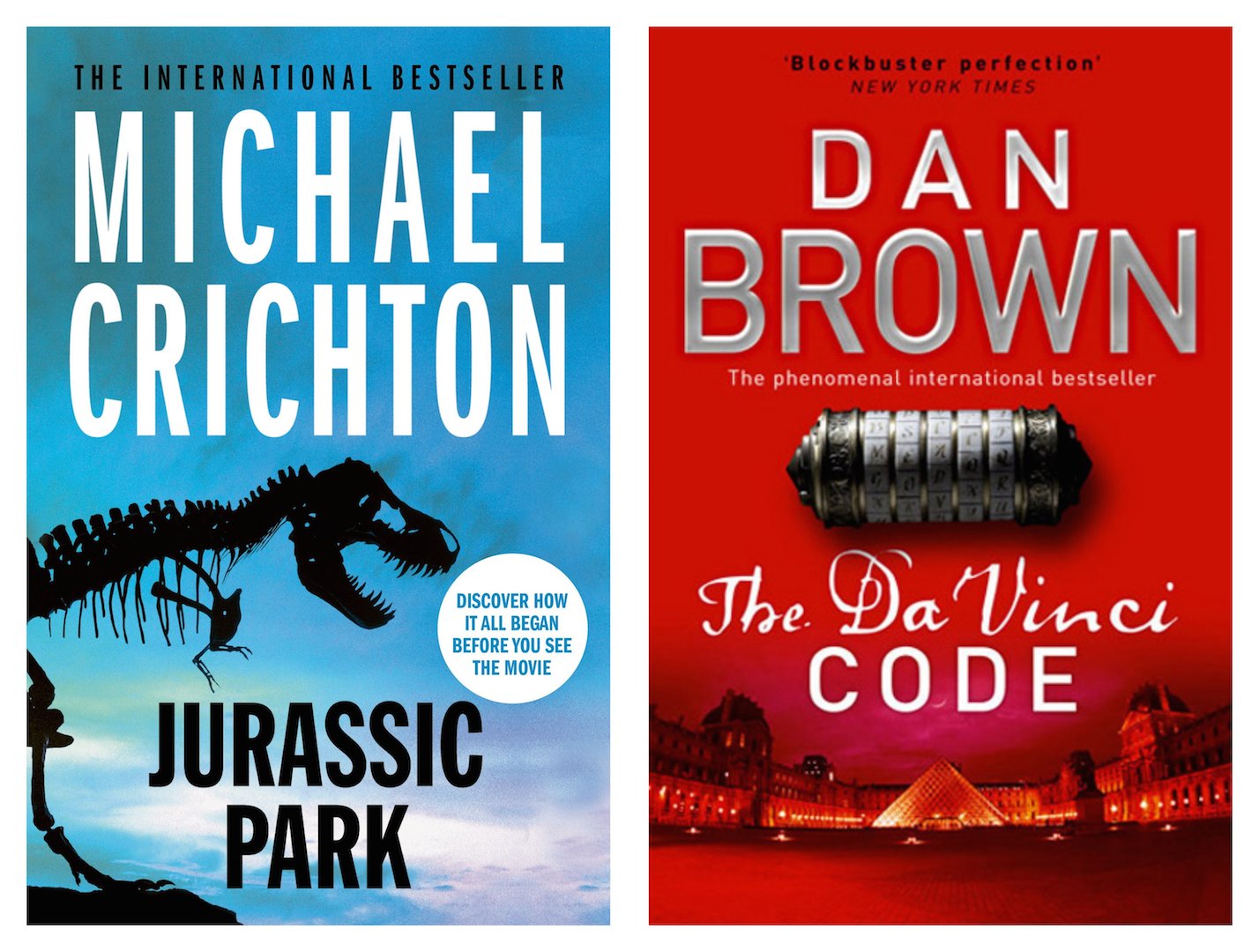
Michael Crichton has probably not read Thomas Hobbes. Dan Brown has probably not read John Buchan. You are not required to be a connoisseur in film, TV, comic books, art or literature. You don’t even need to be a good writer, although you should try to be. Dan Brown is not a good writer, but he is a terrific storyteller.

You cannot generate more excitement in society than these two novels did. Dan Brown in particular is not a good writer, but you never noticed. You might not create the next ‘Jurassic Park’, but you can learn from these two authors.

You don’t have to be a part of ComicsGate to be successful with a crowdfunded book. You don’t even have to like anyone in it. But you would be very wise to follow their advice. If you make your choices in spite of ComicsGate, you only punish yourself.

If your book is successful enough, you can consider foreign language versions. If your book is written in Portuguese, you might test interest among English readers. If your book is written in English, perhaps Japanese readers might like a Japanese translation. In general, don’t think about foreign language versions until after you have successfully delivered your book. Keep your campaign focused. In any case, a publisher may want to sell your book in foreign markets, and they will take care of translations.